Get Lube Report Global FREE

  • Lubes’n’Greases weekly lubricants industry newsletter.

  • Register for FREE

Switching to renewable carbon from extracted carbon is key for the lubricants industry to become carbon neutral, according to Nova Institute, a German renewable carbon research organization.

Lubricants, as well as a host of other products including plastics, detergents and textiles, contain embedded carbon. This carbon is often in the form of organic compounds.

A new report published by the institute found that demand for this embedded carbon is about 450 million metric tons per year. Extracted hydrocarbons account for 85% and the remaining 15% from renewable sources, such as biomass and recovered carbon. This is the first time anyone has made such a calculation of embedded carbon, says the institute. Previous studies have focused on the use of fossil-derived resources for energy and fuel use.

“Most lubricants are made from fossil carbon, which will be unaccepted to clients in future,” Michael Carus, founder and CEO of Nova Institute, told Sustainability InSite. “While lubricants can also be produced from biomass, CO2 or chemical recycling, their biggest CO2 footprint is from embedded fossil carbon.”

The institute predicts that as populations and incomes grow, demand will increase to 1 billion t/y by 2050 – the European Union’s target year for carbon neutrality. To meet demand from users, renewable carbon production must increase by a factor of 15 by then, the report says.

To create long-lasting and sustainable change, industries such as lubricants must substitute extracted carbon with carbon from biomass, recycled and captured carbon from industrial processes or the atmosphere.

“The chemical world is dramatically changing – huge pressure from NGOs, climate protection groups, policy and society – but also because the demand side is changing. The demand for fuels is decreasing, which [has] a lot of impacts on the supply chain,” said Carus.

Today, cement, chemicals and other derived materials use 11% of fossil resources. This share will increase as demand from a larger global population and decarbonization of the energy sector, explained Ferdinand Kähler, a sustainability scientist at Nova Institute. 

The new calculation can be the starting point for discussion about the future of the chemical and derived material industries, Kähler said.

“Many questions arise, like which is the best source of renewable – not-fossil – carbon? How can biomass contribute across sectors? Which innovations will be required,” he said. “But this highly depends on the region of production, the production process, the desired properties of the product and many more.”

The shift toward renewable carbon use is not without its critics, however. Carus pointed out that with every major transformation, some aspects of the shift toward renewable carbon are debated.

“The role of recycling is only one aspect. There are some NGOs criticizing chemical recycling not being suitable to solve the issue of plastic recycling. [Whereas] other voices … recognize its potential,” he said.

Some people are concerned that biobased chemicals and materials may compromise biodiversity or food security. Research by the U.S. Oak Ridge National Laboratory’s environmental sciences division highlights competition for arable land required for food production, soil disturbance, nutrient depletion, impaired water quality, potential environmental effects from biomass feedstock production and utilization of agricultural and forest residues for energy.

Carus said agricultural side streams, like wheat straw, can be used as feedstock and so don’t encroach on food production. This contrasts with the controversial use of palm oil, which fell out of favor after being hailed as a substitute for fuel production.

Lubes’n’Greases talked to Mark Miller, the CEO of Biosynthetic Technologies, about the sustainability of his company’s products and why he thinks sustainability matters.

Miller left behind petroleum-based chemistries to start a company making biodegradable fluids. Now he heads Biosynthetic Technologies, which produces a range of synthetic oils from renewable organic fatty acids for industrial, metalworking and personal care applications. Its three product lines pass or exceed tests for biodegradation and bioaccumulation, and meet the requirements for the European Ecolabel and the U.S. EPA Vessel General Permit. The company is also eyeing the electric vehicle coolant and dielectric fluid space with keen interest.

QWhy did you start this business?

It’s what gets us up in the morning! We started with, “Why? Why are we doing this?” and came up with our vision – we’re providing innovative solutions for a sustainable future. That is our raison d’etre. Our message is that we want to be a sustainable petroleum replacement.

Now, I’m from the oil industry and there’s a lot of really good things that oil does – friction and wear. It really makes the world go around. But we also think there are more sustainable products or technologies that we can utilize, particularly when people are working in environmentally sensitive areas or in places that have a high propensity of contact with humans and animals and plants.

QWhat was the moment in your career when sustainable lubricants became your focus?

Personally, it was the birth of my first-born son. When I was at Lubrizol, selling harsh chemicals to the petroleum industry – and doing quite well, and I saw this little kid and I said to myself, “There’s got to be a better way.” And within a few years, I’d spun off and started my first company, which was Terresolve Technologies, that made vegetable-based lubricants. It’s always been a huge passion of mine on a personal level to be more sustainable and more environmentally acceptable.

QTake us back to when you started Terresolve. What was the market like for eco-friendly products?

I founded Terresolve in 1996, and I like to say that back then green was still a color. Nobody understood what we were doing. We were hanging around people with flowing shirts and flowers in their hair.  

The sustainable movement – the biodegradable movement – was just in its infancy. People were bootlegging biodiesel in their garage and running it in their Volkswagen minibus. Now it’s grown up, as you well know.

In many of my presentations, I talk about what I consider to be the steps and stages of sustainability. You first had to be biobased, and you had to be safe, and you’re talking about coming from vegetables, being non-toxic, biodegradable and non-bio-accumulative. Then it had to work, then you had to have a performance basis. And then you had to have a cost-effective business model.

They didn’t have to be on price parity with petroleum – and bio-lubricants, bio-metalworking fluids and even bio-cosmetics still aren’t – but they have to have a value proposition. It’s got to make sense from an economic perspective.

So, if you have people working in close contact with metalworking fluids, you want to try and minimize the harsh chemicals as much as you can. People in the personal care space are trying to move away from white oils and silicones, and things like that. People are continuously moving towards the bio-organic.

We’re all of the names – we’re vegan, we’re halal, kosher, and that’s important in some industries.

QSustainable is an overused word when describing lubrication products these days. What qualifies BT’s offerings as sustainable?

Our primary molecule is derived from vegetable oils, mostly soy and castor oils. We feel it’s very important to support the agrarian community. Our soy products are grown in the US and support our friends and neighbors. Our products are derived from 12 hydroxy stearic acid. And what we like about that is it’s grown in India in very arid environments where nothing else can grow. So it’s not competing with food.

The farmers are at the lowest rung of the socioeconomic strata. It’s really an entry point to help people pull themselves out of poverty. We like it from that social aspect of it.

Our Indian manufacturing facility is in the heart of the castor lands. Literally, you look outside the fence and you see the plants. You’re not shipping products all across the world; it’s really close. Our CO2 footprint on that is very, very small.

The facility itself is 100% powered by renewable energy from a local wind farm. The reactor boilers are fired by spent castor hulls or castor cake.

From that perspective, when you do the total lifecycle assessment of our estolide, sitting at the dock or at our gate, we’re actually carbon negative. For every ton of estolide, we’re absorbing 9 tons of CO2. Part of it is the plant absorbing that.

QFrom which end-user industry do you feel the most momentum for sustainability?

I think they’re all the same. If you look at the big metalworking and/or industrial lubricant companies, they’re all claiming carbon neutrality today on some level, and independently on other levels.

Most of them are doing some carbon trading now, but they have a very strong sustainable visions of getting there independently without trading carbon credits. I think sustainability is an idea whose time has really come.

QWhat would tip the balance faster in favor of the kind of products that BT is producing?

Our message is they work better. There was a notion that if it was environmentally friendly or sustainable or was biobased, it wasn’t as good. And that’s not the case anymore. I’ll go toe to toe with any petroleum derived product and steal it’s lunch money. I’m a chemical engineer and I’ve got the data that says we have better oxidative stability, better hydrolytic stability or at least as good as the top-tier polyalphaolefin or top-tier synthetic petroleum-derived molecule, or as good as. I’m ok with that.

QWhat changes have you seen over the years that have affected the market for biobased lubricants?

I think the single most-important legislative action for biodegradable lubricants overall is the EPA Vessel General Permit. It legislates effluent off of marine-going vessels over 79 feet.

And at the end of 2012, they changed some of their verbiage for environmentally acceptable lubricants in what they call oil-to-sea interface. It’s where big machinery on big ships meets the water.

They’d done a very exhaustive study on how much petroleum oil gets into the ocean on a daily basis, some of which is by design, like the sealing mechanisms on the aft propellers on big boats. You can do the math very simply and see how much petroleum goes into the ocean. And they mandated the use of EALs in those pieces of equipment, and it revolutionized the market overnight. 

If you also look at the USDA Bio-preferred Program, it has had a significant economic impact in terms of employment and GDP growth – like $6 billion in economic GDP growth on a global basis. It’s been one of the greatest successes that people don’t know anything about in terms of using bio products.

We have very, very high bio-based content, so our customers can make bio-preferred-capable products. The beauty of being biobased is that it’s renewable. Every year there’s a new soy bean crop, or every year there’s a new castor crop. It’s putting people to work.


Polymers in liquid formulations are found in a vast array of products and substances, but almost none of the 36 million metric tons produced per year is recovered, something the United Kingdom’s Royal Society of Chemistry wants to change.

The RSC invited five major manufacturers that use PLFs – Afton, Croda, Crown Paints, Scott Bader and Unilever ­– to form a task force to find ways to improve their sustainability.

“We have gathered together some of the most important businesses in industry relevant to PLFs on our task force,” Richard Holliday, the RSC’s industry team business programs manager, told Sustainability InSite. “We hope we have put PLFs on the map as a global sustainability challenge.”

Enough PLFs are produced each year to fill the U.K.’s national sports arena Wembley Stadium 32 times over. Despite the scale of production, virtually none is recovered, said Holliday.

“Much may remain in use for many years, for example, the paint on your walls,” he said.

There are hundreds of mostly synthetic PLFs with individual chemistries often derived from extracted hydrocarbons. Their flexibility makes them useful as thickeners, emulsifiers and binders in millions of products across eight key application areas. Paints and coatings, adhesives and sealants, and inks and coatings use a combined 31 million t/y of PLFs, while the rest is taken up by agriculture, lubricants, cosmetics, cleaning products and water treatment.

They are so prevalent that the annual market for PLFs is worth U.S. $125 billion. But they are difficult to recycle, the RSC noted in a recent report.

“The fate of thousands of types of chemicals is incredibly complex, and so we are currently at a stage where we are looking at a landscape scale to maximize improvements to the sustainability of PLFs.”

To tackle the problem, the RSC recommends innovation, such as in developing natural or bio-based alternatives; creating a circular economy by finding ways to reuse waste PLFs; and improving waste management.

“As a group, PLFs are produced at a huge scale, but there is little coordinated effort looking into their potential environmental impacts,” said Holliday.

Unlike used lubricants, which have an established collection rerefining sector, there is no such system for PLFs. As with single-use plastics, which are also polymers, PLFs are manufactured, used and then disposed of. This leaves behind a substantial carbon and waste footprint, said Holliday.

The volume of PLFs used in lubricants, about 400,000 t/y, is relatively small compared with the 21.6 million t/y in paints and coatings. But Holliday thinks lubricant companies still contribute to solving the problem.

“All businesses can play a bigger role in tackling this challenge by sharing examples of innovation in their industry to inspire others and facilitate knowledge sharing between markets.”

Battery electric vehicle enthusiasts like to tout their cars’ green credentials, and there is compelling data that shows EVs have a smaller carbon footprint over their lifetimes compared with internal combustion engine vehicles. But Polestar, a Swedish high-end EV company, thinks that is not enough.  

Polestar recently announced its “moonshot goal” is to create the world’s first truly climate-neutral car by 2030. But to make an EV requires lots of electricity, not only to power the production line but also for the legions of raw materials and parts suppliers.

Other energy-intensive EV ingredients include the lithium and cobalt for the battery, steel for the chassis and plastics for the trim. Critics of the automotive industry point out these environmental impacts, as well as socia ones, such as child labor used in cobalt extraction in conflict-stricken Congo.

After an EV is made, it needs to be charged. This raises more concerns about the emission factor of the electricity generated wherever the car may be topping up its battery. At the end of the use phase of that battery, how to recycle or reuse it also becomes an issue.

Still, EVs are clearly the way road transport is heading, and whether they like it or not, most of the world’s biggest automakers are investing substantial sums into e-mobility and are at least making the efforts toward sustainability, too. These efforts include carbon offsetting, which doesn’t reduce the carbon produced but instead commits money to projects such as reforestation, renewable energy and landfill methane capture.

Environmentalists warn that offsetting is not sustainable in the long run and that planting trees or issuing carbon credits displace the problem elsewhere. Polestar’s CEO Thomas Ingenlath agrees.

“Offsetting is a cop-out. By pushing ourselves to create a completely climate-neutral car, we are forced to reach beyond what is possible today,” Ingenlath said in a news release.

The company recently promoted its Polestar 2 performance EV in Europe and North America. The car includes several kilograms-worth of aluminum parts. According to the United Nations Environmental Program, to extract and process 1 kg of aluminum takes about 200 megajoules of primary energy and produces 8.24 kg of carbon dioxide. Just the assembly of an entire average-sized car requires about 48 megajoules.

About 80% of the world’s primary energy comes from hydrocarbons or coal, with about 10% from biofuels and waste and 10% from renewables.

“This means that any ‘zero-emission’ project always has a hidden, embodied carbon footprint,” Boris Zhmud, head of research and development at Berlin-based lubricant marketer Bizol, told Sustainability InSite. The production of genuinely climate neutral car is a formidable task,” he said.

Hypothetically, there could be a truly climate-neutral car manufacturing ecosystem, whereby all raw materials are extracted, transported and processed and tools and machinery are obtained and operated using renewable energy, he argued.

“In the end, it is … far more complex than just saying ‘I power my plant by hydropower’ or ‘I charge my car from photovoltaic solar panels’,” Zhmud said. “The world energy system is one big organism.”

Zhmud pointed out that unless you generate your own power, it is difficult to ensure whether or not your electricity supply is renewable, unless the local power company provides it.

“All users are connected to the same power grid that has its carbon footprint, and we all share the same atmosphere,” he said.

This leaves Polestar with a large hill to climb to reach a carbon neutral car without resorting to offsetting.

Infineum aims to slash carbon emissions per ton of product by a fifth by 2025, the company said in its first sustainability report published in April.

A major U.K.-based specialty chemicals company co-founded by Shell and ExxonMobil, Infineum joins hundreds of other organizations around the world that use the Global Reporting Initiative framework to report on the sustainability of their environmental and social impacts and corporate governance.

Over the past two years, Infineum’s gross direct greenhouse gas emissions from operations, known as Scope 1, fell by 28% to 57,400 metric tons in 2020 from 80,400 in 2018.

Its Scope 2 gross emissions also fell over the same period, helped along by the installation of solar panels at its Linden Technology Center in New Jersey, reducing carbon dioxide emissions by 1,300 metric tons per year, as well as fully powering its Singapore premises with renewable energy.

At the same time, the company reduced water consumption by 25% to 12 million liters, down from 15 million in 2018, but increased waste output by 15%.

“2025 gave us a length of sight into the future that we could tangibly see ourselves, and what we needed to do, to deliver these transformational steps in our sustainability journey,” Maurizio Abbondanza, Infineum’s sustainability and technology director, told Sustainability InSite. 

Other achievements include acquiring ISO 14001 Environmental Management System certification for each owned manufacturing facility around the world and cradle-to-gate life cycle assessments for products, thereby “setting the baseline measurements critical for driving and measuring performance in the years to come,” Abbondanza said. 

The report includes Infineum’s sustainability targets, among them setting up a scheme this year to encourage 25% of its 2,000-strong workforce to take time off to volunteer in community support and science, technology, engineering and mathematics activities.

Infineum also wants to increase transparency in its supply chains by assessing its suppliers’ sustainability performance, which will contribute to reaching its targets, Abbondanza said.  

“A single business alone cannot deliver the impact required for the United Nations Sustainable Development Goals,” he said. “We must do what is in our control to operate a sustainable business, but when it comes to maximizing the impact we can have for our stakeholders and for the planet, it requires collaboration within our supply chain.” 

To do this, the company is using the Ecovadis platform to understand the risks to business and to help identify how sustainability may be a future differentiator, Abbondanza said.

“It has been a very rewarding start for us on our sustainability journey,” he said.

Lubricant, base stock and additive companies are doing a good job of communicating their sustainability efforts to employees, according to a new survey by Lubes’n’Greases.

Public companies have faced mounting pressure from investors such as Blackrock, the world’s largest asset management company, to minimize environmental impact, implement social responsibility projects and improve corporate governance standards. These companies are in turn asking their suppliers to improve operational sustainability. 

The first Lubes’n’Greases survey on perceptions of sustainability asked more than 700 people whether they thought their company and the industry as a whole were actively engaged in sustainable business practices in three main areas: the environment, social wellbeing and corporate governance.

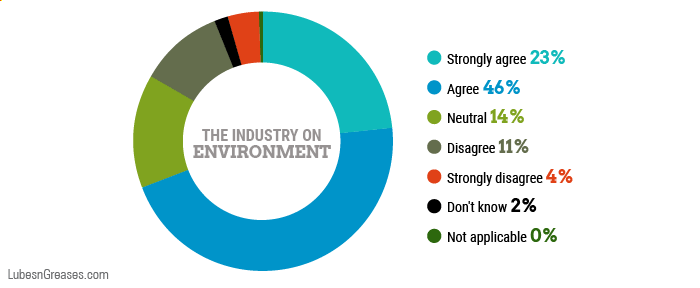
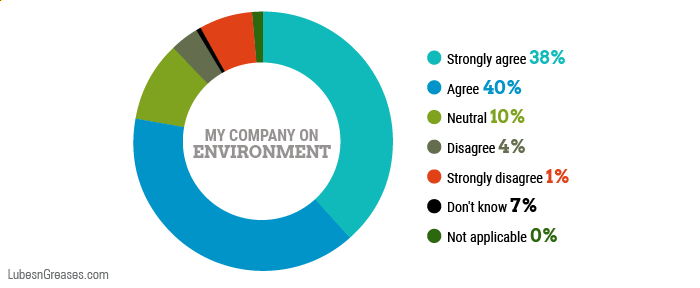
Overall, most respondents perceived their company outperformed the industry in these three areas. While 77% said their company tries to reduce energy consumption, greenhouse gas emissions and water use, 69% thought the same of the wider industry.

Environmental

Reducing a company’s overall carbon footprint can be challenging as what they produce is from a hydrocarbon base stock. However, about 30% of global energy production is lost each year to friction, wear and corrosion. Lubrication therefore makes a substantial contribution to reducing energy demand and fuel consumption for users, known as the carbon handprint, by reducing friction, wear and corrosion and increasing the lifespan of machinery.

“However, this is not and will not be sufficient in the future for lubricant manufacturers to generate and maintain their profit, as pressure and purpose are increasing. The lubricants industry needs to make progress to measure, manage and modify its own corporate carbon footprint, which it leaves behind, while making its lubricants,” as Germany-based independent sustainability adviser Apu Gosalia told Sustainability InSite.

“Decarbonization must be done along a lubricant manufacturer’s entire process and value chain, together with the raw material suppliers, as they account for around 90% of the product carbon footprint of a finished lubricant,” Gosalia explained.

“The lubricants industry actively practices environmental sustainability.”

“My company actively practices environmental sustainability.”

Social

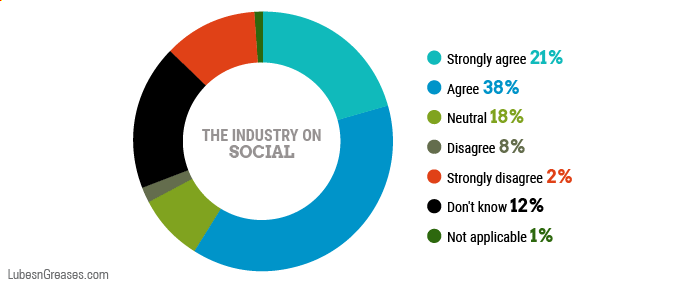
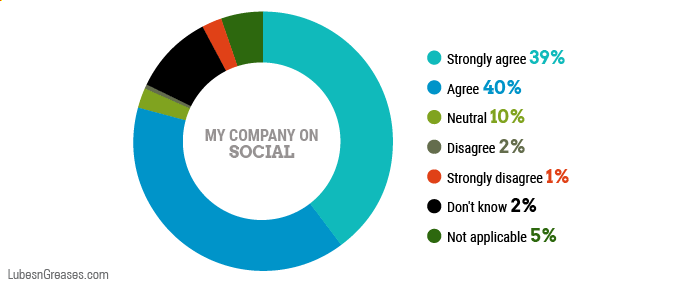
The difference in perceptions between company and industry performance on environmental issues was the narrowest of the three pillars. It widened when respondents were asked about social issues, with 79% of them saying their company actively practices social sustainability and 59.5% thinking the lubricants industry was doing so.

“My experience on why companies are socially engaged – both internally regarding employees and externally in terms of corporate citizenship – is because they either want to be or they have to be,” said Gosalia. “Generally speaking, mission statements, stakeholder expectations and demands from society and non-governmental institutions are setting clear guidelines and frameworks on how and what companies should do to engage socially towards their own employees, but also towards society in an appropriate way.”

“The lubricants industry actively practices social sustainability.”

“My company actively practices social sustainability.”

Governance

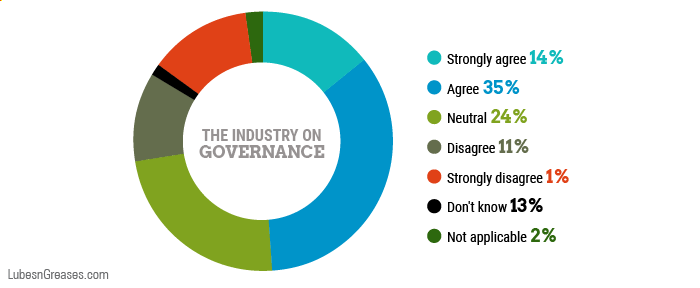
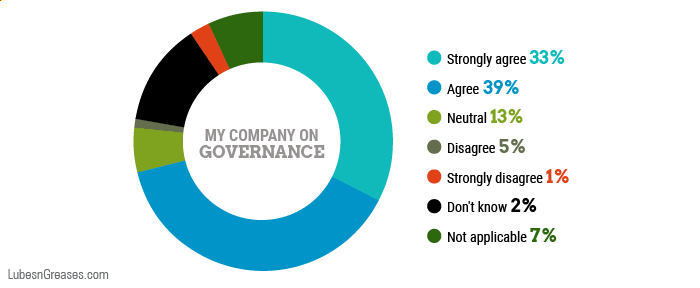
The greatest difference in respondent perceptions was in sustainable governance, with 71.6% saying their employers actively practiced sustainable corporate governance and 47% thinking the same of the lubricants industry as a whole. This suggests that employees’ think their companies are doing better than their peers, where there is much room for improvement with diversity, ethics and transparency.

As with much of the hydrocarbons and chemicals industries, men make up most of the workforce, especially at the management level, according to the Lubes’n’Greases Workplace Trends Report. However, the same report also found that diversity was not a top concern, even among women. The number one concern was the industry being slow to adapt to change.

“The challenges the lubricants industry is facing, especially in the past months due to the pandemic and even before – in the form of digitalization, electric vehicles and decarbonization – forces it to quickly adapt to change and come up with sustainable solutions,” said Gosalia.

“The lubricants industry actively practices governance sustainability.”

“My company actively practices governance sustainability.”

The Lubes’n’Greases perceptions of sustainability survey captured an even distribution of company revenue levels – 38.06% earned less than $10 million, 31.05% were between $10 million and $100 million and 30.88% were greater than $100 million. Almost half of respondents, 44.57%, work for lube blenders or marketers, while 15.88% have business that focuses on end users.

The survey was conducted in tandem with the launch of a new web-based resource called Sustainability InSite. Sustainability InSite is an in-depth look at how environmental, social and corporate governance sustainability are affecting the lubricants industry. It also offers insights into what companies need to do to respond to this seismic shift in business.

The survey defined environmental sustainability as trying to reduce energy consumption, greenhouse gas emissions and water use; implementing measures to reduce waste through reuse and recycling; and mitigating impact through innovation with things like feedstock and packaging. Social sustainability was ensuring equality as part of hiring and labor practices; valuing relationships with surrounding communities and end users; and sourcing raw materials from places that do not violate human rights. Corporate sustainability was running the business transparently and ethically, encouraging diversity in the board room and compensating executives fairly.

Welcome to my first column for Sustainability InSite. I’ll focus on an aspect of corporate sustainability and the practicalities of helping the lubricants industry remain profitable and relevant long into the future.

We are living in extraordinary times, stuck between corona crises, climate change and cultural conflicts. It all adds up to uncertainty. In this context, the title of this column, “Sustainability in Uncertainty?” has a dual meaning. The first raises a question: Is sustainability still a priority for the industry during this time of uncertainty now and in the post-COVID world? The second, however, postulates the opposite: Wouldn’t sustainability be the right strategy to solve today’s challenges?

At the beginning of September 2019, my son and I were admiring the view from the top of Snaeffelsjökull (“jökull” meaning glacier) in Iceland. Under our feet was mature ice, thousands of years old. The sun was shining, the sky was blue and it was bracingly cold. There was no lockdown, everything was free and open and we could travel, go to restaurants and everything was OK.

But was it really OK? “Ok” (“Okjökull” in full) was also the name of the first glacier in Iceland to be declared dead in 2014. In other words it melted – a direct result of climate change. At what was the base of the glacier is a plaque to commemorate its demise, embossed with the global average atmospheric carbon dioxide concentration when the plaque was placed there in 2019 – 415 parts per million. That was the highest CO2 concentration ever measured in Earth’s atmosphere.

Oscar Wilde once said: “Everything will be OK in the end, and if it is not OK, it is not yet the end.” I believe in the last part; it is not yet the end.

The current short-term Coronavirus crisis puts pressure on sustainability while the long-term climate crisis gives purpose to it. Therefore, we should no longer only look at the well-known 3 Ps of sustainability but should add two more and think in terms of 5 Ps .

The 3 Ps of sustainability stand for the economic, ecological and social dimensions of sustainability – in other words for profit, planet and people. They are often referred to as the triple-bottom-line of sustainability.

On the economic side, the most sustainable target is to continue making a profit. This is not an unethical goal, but some business leaders might consider it an overriding one. If you’d have asked a CEO or CFO one or two decades ago what there 3 Ps were, many would have answered profit, profit and profit. If you were to ask the same question today, their answers should be – and in many companies, this is becoming the case more and more – profit, planet and people.

Lubricant companies need to continue making profits, of course, otherwise they are out of the game of making a sustainable difference or contributing sustainable solutions in the future, not to mention socially irresponsible and shedding jobs.

While continuing to have the first P stand for profit, companies must be aware of the ecological and social footprint they leave behind, while making money. This is where the planet and people dimensions of sustainability come into play. Creating not only economic but also ecological and social value for a company, its employees and external stakeholders is no longer an add-on or nice-to-have, but has become an integral part of the strategy of companies that want to be successful in the future.

Taking the lubricants industry as an example, footprint must be measured along the process and value chain of a lube manufacturer. This can be done by answering the following questions about raw materials, as well as finished products: “How sustainable are my suppliers and their supplies?” and “How sustainable is my lube production and are my lube products?”

As mentioned before, I propose two more Ps. The 4th calls for an examination of the actual purpose of a company, which in my view must be, to provide sustainable value to its customers. The 5th P is the pressure currently placed on sustainability strategies due to the uncertainty we all face these days.

This uncertainty can be managed by an interesting concept called “effectuation.” Effectuation is a method of decision making that is used during uncertain times and that has unclear goals. Classical management dictates that one can predict or plan for the future, while effectuation accepts that chaos and the unforeseen can and will happen but that the future can still be shaped. Metaphorically speaking, when friends turn up to your house unannounced in the evening, you feel obliged to feed them. Since the stores are all closed, you improvise the best you can with what is already in the fridge.

The Five Principles of Effectuation
1. Bird in Hand: Create solutions with the resources available here and now.
2. Affordable Loss: Only invest as much as you are willing to lose.
3. Crazy Quilt: Enter into new partnerships that can bring new funds and directions.
4. Lemonade Principle: Mistakes and surprises are inevitable and can be used to look for new opportunities.
5. Pilot in the Plane: Co-create the future with things under your control and with self-selected partners.

How does effectuation connect to sustainability? The answer comes with my 5 Rs: recover, rethink, reset, restart and reduce. Recover by means of effectuation from the pandemic. Rethink your business model. The current crises revealed to us through a magnifying the mistakes some companies have done in the past. Press the reset button, which many companies have been forced to do. Restart your business again in a more sustainable way, for example, by integrating the United Nations’ 17 Sustainable Development Goals, which resulted from the Paris Agreement of 2015 as a guideline and framework. Reduce resources and base your strategic thinking on repair, recycling, and reuse. This fosters a thinking toward the circular economy and cradle-to-cradle resource management, wherever possible.

The word sustainability is overused – in conferences, promotional literature for products, in year-end reports – yet there is still no common consensus on what it means in the business world.

So let me share my definition, which will form the foundation of these columns and throughout Sustainability InSite. I believe that, at its core, corporate sustainability means continuous improvement, in all fields along the process or value chain of the business, to create economic, ecological and social value for the stakeholders of a company, be they customers, employees, investors, suppliers, communities and government. This is especially important during this seemingly endless pandemic.

Thus, sustainability in times of uncertainty takes on another layer of meaning when we examine the word itself: “sustain ability” – the ability to sustain business. Companies are faced with the question: “How can we sustain the abilities of our people, our production, our products and our customers during and after COVID-19?”

The 5 Ps of sustainability, the 5 principles of effectuation and the 5 Rs of agile business can be applied in every industry, including the lubricant industry. How can this be achieved? Let’s find out next time.

Take care and,

STAY SuSTAYnable!

Apu Gosalia
Adviser, partner and honorary lecturer in
sustainability strategy

A new federal law could slap German companies with substantial fines if their suppliers use child labor or pollute the environment. Due diligence into fair trade has so far been voluntary in Germany but buyers may now be held accountable for the entire supply chain.

Germany is the European Union’s largest economy and in 2020 had GDP of €3.4 trillion and imported goods worth €1.03 trillion. Imports include raw materials that are sometimes produced in countries with poor human rights and environmental records.

The new law, which has passed the cabinet draft stage and will be presented to parliament, aims to prevent companies from turning a blind eye to violations of widely accepted standards at home by outsourcing production to developing countries, Minister of Economic Cooperation and Development Gerd Müller explained to German media.

“We accept and cement the exploitation of other human beings and nature in developing countries,” Müller said.

Reactions have been mixed. The law gained support from some notable manufacturers, such as food retailers Tchibo and Rewe. The Federation of German Wholesale and Foreign Trade and the Confederation of German Employers’ Associations expressed concerns that companies already have enough to contend with after a year of lockdowns.

Germanwatch, an environment and development NGO based in Bonn, Germany, also has reservations.

“We definitely think it is a concrete step towards reducing human rights violations and environmental damage overseas, even if there is still criticism because the law proposal was watered down in several aspects,” Cornelia Heydenreich, Germanwatch’s head of corporate accountability, told Lubes’n’Greases.

Germanwatch is among a number of civil society groups, businesses and academics that  are urging Parliament to strengthen the law’s provisions. Heydenreich explained that one of its weak points is that it will not improve civil liability (EXPLAIN) or victim’s facility for legal recourse.

In a recent position statement, Germanwatch points out the new law lacks reach beyond immediate suppliers and that the law’s current draft stipulates due diligence obligations only applies “in full to the company’s own business operations and to direct suppliers.”

Heydenreich praised the law for the strength of its regulatory enforcement process

“We do see that the law has got teeth in this regard,” she said.

The law will apply to about 600 companies with more than 3,000 employees in 2023, 2,960 companies with more than 1,000 employees in 2024. Companies with fewer than 1,000 employees will be exempt, reported Reuters.  

Fines could total hundreds of thousands of euros and if they exceed €175,000, companies are excluded from public procurement contracts for up to three years. They increase to 2% of a company’s revenues if annual turnover exceeds €400 million.  

Shell Lubricants jumped on the sustainability bandwagon last month – the company might say it pushed closer to the front – by announcing that a significant chunk of its finished lubricants are now carbon neutral.

The Dutch-Anglo energy giant is the world’s largest lubes supplier and is one of the first in the industry to make such claims. The company said it achieved the distinction through a combination of reducing carbon dioxide generation by various parts of its business and by investing in carbon credit projects.

“We know our customers are looking for ways to reduce their net carbon footprint, and as the world’s leading lubricants supplier we have an important role to play,” Executive Vice President for Global Commercial Carlos Maurer said in a Feb. 23 news release.

Sustainability proponents say such initiatives will become more common in many industries.

“Offering low-carbon products will continue to grow in popularity,” said Kyle Harrison, an analyst in Bloomberg New Energy Finance’s sustainability research team, “and we expect these products to continue commanding a premium so long as there is continued demand from customers setting net-zero targets of their own.”

Shell said the carbon neutrality claim will apply to the following products in the following geographic areas:

* Helix Ultra 0W light-duty engine oils in Europe, Asia-Pacific and the Middle East;

* Helix Ultra 5W in Asia-Pacific;

* Pennzoil Platinum 0W, Pennzoil Platinum High Mileage 0W, and Pennzoil Ultra Platinum 0W passenger car engine oils in the United States and Canada;

* Rimula R6 and Ultra heavy-duty diesel engine oils in Asia-Pacific and Europe;

* Rotella T5 and T6 heavy-duty diesel engine oils in the United States and Canada;

* a “wide range” of premium business-to-business products, including lubricants and greases used in the wind sector and Naturelle-branded eco-Label products.

Annual sales of these products exceed 200 million liters, Shell said, compared to approximately 5 billion liters for all of the company’s lubricants. The company said it has been reducing the carbon footprint for all of its lubes through a variety of measures. Since 2016, it reduced CO2 generation by its manufacturing processes by 30%. Half of the energy used by its blending plants now comes from renewable sources. It has increased its use of recycled materials in lubricant packaging.

After taking these measures, the company calculated that the products it wanted to promote as carbon neutral were still net positive for CO2 generation, so it offset those emissions with credits from projects estimated to compensate for 700,000 metric tons per year of CO2 emissions.

The press packet for the carbon neutrality announcement identified 10 projects, mostly reforestation and afforestation initiatives in in Asia, South America and Africa. For example, a project in Xinjiang, China, is planting trees to reforest 6,698 hectares of dessert. Developed by Shell and Climate Bridge, it is estimated that the trees will soak up 90,393 tons of CO2 per year, while also creating jobs and protecting five endangered species. In accordance with recognized carbon credit accounting practices, Shell claims a one-time 90,393 credit for the project.

Shell has a larger portfolio of such projects that it invests in, and some of these 10 predated the carbon-neutral lubricant campaign but were allocated to it. A few of the 10 projects are in early stages and have not yet generated credits.

According to spokesman, Shell intends to continue promoting products as carbon neutral beyond this year, so it will continue to undertake new projects to obtain the necessary credits. The offsets claimed this year exceed the footprint of the lubricants in question by a comfortable margin so that the neutrality claim should remain valid even if sales volumes increase, he added.

Shell is not the first company in the lubricants industry to make a carbon neutrality claim. For example, Fuchs Petrolub SE, the industry’s largest independent supplier, claimed that its entire business had become carbon neutral by the start of 2020. Like Shell, the German company said it achieved the distinction through a combination of reducing CO2 emissions related to its operations and by investing in projects that provided carbon credits. Shell has set a goal of making its entire energy business carbon neutral by 2050.

Bloomberg NEF’s Harrison said the analysis used by Shell is valid and common.

“For companies setting a net-zero [CO2 emissions] target or equivalent, there is usually going to be a component of a company’s footprint that cannot be directly reduced or removed,” he told Sustainability InSite. “In the oil and gas sector, this is especially difficult for Scope 1 emissions – which are direct emissions from operations – and Scope 3 – which take into account the use of products by customers.

“Many companies in this sector are investing in carbon offsets to neutralize the remaining emissions they can sequester or remove. What’s important is that they invest in high quality carbon offsets, from projects that focus on removal or sequestration. These are typically forest carbon projects, where investments from Shell and other companies are used to plant new trees or prevent trees from being cut down.”

Beyond satisfying investors and customers with interest in sustainability, Harrison said carbon neutral products can generate financial returns. “In some cases, these products command a premium – a partially because customers can in turn reduce their own emissions by purchasing these products,” he said. “It’s an effective way for companies to uncover new revenue streams while simultaneously decarbonizing.”

Fulcrum Bioenergy Inc. will build its first waste-to-aviation fuel plant outside of the United States at Essar Oil’s Stanlow refinery in northwest England. The project will bring jobs and investment to the region, said Fulcrum. The Californian company specializes in making low-carbon transportation fuels from non-recyclable household waste using a proprietary technology.

Aviation is responsible for 2.5% of the world’s carbon emissions, and it is believed that sustainable aviation fuel can contribute to lowering the industry’s carbon footprint. About 1% of jet fuel currently consumed is sustainable, but the International Energy Agency in its sustainable development scenario hopes this will increase to 10%.

Fulcrum NorthPoint, as the plant will be known, will convert several hundred thousand metric tons of pre-processed waste, which would otherwise be destined for incineration or landfill, into about 113.5 million liters per year of fuel. Construction should begin in 2023 and take up to two years.

The site has existing storage capacity, a tie-in with pipeline infrastructure and is close to Manchester Airport, the U.K.’s third-busiest airport and the busiest outside of London.

“The advanced fuel that will be produced from this plant will position Stanlow as the U.K.’s leading sustainable aviation fuel hub,” Essar Oil CEO Stein Ivar Bye said in a press statement. Essar is the joint venture partner of the project, which has yet to clear planning permission and gather financing.

Sustainable aviation fuel can be refined from processed household waste or other materials such as animal and plant oils, textiles and forestry waste, which would otherwise stay in landfill or be incinerated. The disadvantage is it can be twice as expensive as conventional jet fuel, which is a cost that will likely be passed onto passengers by airlines already operating on tight margins.

“Because for these fuels, in the best case, no additional fossil fuels are needed. Only carbon, which is already in the technosphere. This makes a difference in the carbon footprint. The environmental burden of the first product is normally not passed to the new product – kerosene,” Michael Carrus, founder and managing director of the Nova Institute, an independent German research institute that works on renewable carbon technology, told Lubes’n’Greases. “It will significantly reduce carbon footprint.”

Carus said so-called green aviation fuels can be made with biomass, ethanol or methanol using the Fischer-Tropsch reaction or from chemical recycling pyrolysis or gasification, using solar or wind generated electricity to power processes.

Fulcrum has other projects under construction in the US. Its first plant in Nevada is nearing completion and will be the world’s first commercial-scale plant to convert household waste into transportation fuels. It also has plants in development in Indiana and on the U.S. Gulf Coast.

Climate change, deforestation and water insecurity will threaten supply chain revenue worth U.S. $1.6 trillion over the next five years, according to an annual report by CDP. The side effects include changing consumer preferences, loss of access to capital and increased costs, the London-based environmental impact organization found.

Of that $1.6 trillion, an estimated $120 billion will likely be passed along the chain to buyers, as suppliers try to mitigate the costs of physical environmental impacts on their operations, compliance with regulations and market changes.

The report was based on environmental impact data collected from more than 8,000 suppliers through CDP’s online disclosure platform. These suppliers service 154 major buyers participating in the CDP Supply Chain Program, which include companies such as Microsoft, Coca Cola Corp. and Lego. Together, they have combined annual procurement spending of $4.3 trillion.

The report also found that emissions from a company’s supply chain, known as scope 3 emissions, are on average 11.4 times higher than operational emissions, roughly double previous estimates, due to more comprehensive emissions accounting.

As companies look to decarbonize and improve their environment, social and governance ratings, they may increasingly look to their suppliers to reduce their carbon footprint. One of the fastest and simplest ways to decarbonize is to procure renewable electricity, and to encourage suppliers to do the same, Sonya Bhonsle, CDP’s global head of value chains, told Lubes’n’Greases.

“Last year’s supply chain report found that scaling up renewable energy in the supply chains of major companies could save a gigaton of carbon emissions,” Bhonsle said.

CDP, formerly known as the Carbon Disclosure Project, provides a framework for businesses, organizations and governments that want to disclose their environmental impact.

“Financial risks have a domino effect throughout the chain, and corporate buyers will pay the price. Most supply chains run on very tight margins with suppliers often passing cost increases on to their customers,” said the report.

CDP cautions that companies that do not manage their supply chains’ environmental impact risks will also experience greater reputational and regulatory risks than those that do.

“Managing the direct environmental impact of your operations is no longer enough. Businesses must put the spotlight on – and engage – their supply chains,” the report said.  

South African energy company Sasol and waste management company GrnCat have developed a way to recover wax from spent catalysts. Since the GrnCat plant was commissioned in 2018, Sasol has recovered and reused more than 6,000 metric tons of clean wax, thereby reducing waste volumes by as much as 50 percent.

The creation of 30 new jobs associated with the process has added a social benefit to the environmental and economic advantages. “We are gaining environmental and economic benefits from the reduction in landfill volumes and recovery of saleable product,” said Steve Radley, Sasol’s vice president of wax and solvents. “We are also supporting the development of small and medium-sized enterprises through established government funding institutions, which aim to promote economic growth and industrial development in the surrounding community.”

“Since the start-up of our wax recovery plant three years ago, we have been constantly optimizing our processes,” GrnCat founder Jan Reynhardt said. “We have been able to increase our capacity by 60% to 400 tons per month of clean wax.”

“Sasol has prioritized four relevant SDGs, including SDG12 – responsible production and consumption – to ensure our business is environmentally, socially and economically sustainable,” Radley said. “The collaboration with GrnCat is a pleasing success story for Sasol, GrnCat, the surrounding community and the environment. It also demonstrates our commitment to continuous improvement and to making sustainability a reality.”

(From a media release)

The lubricant industry’s primary focus should on be sustainable mobility if it is to contribute to the European Union’s carbon emissions target, cautioned a spokesman for additive company Lubrizol at recent industry event.

Reaching neutral emissions by 2050 is part of the European Commission’s Green Deal, a legislative roadmap to reducing the European Union’s environmental and climate impact while fostering competitive, sustainable industries.

Throughout 2021, the commission – the EU branch that proposes laws – is expected to put forward numerous initiatives that could affect the EU’s lubricant businesses and those looking to import into the bloc. Sustainable and smart mobility should therefore be a priority, Simon Evans, director of the strategic OEM group at additive company Lubrizol, told ACI’s European Base Oils and Lubricants online conference earlier in 2021.

“To achieve the goals of climate neutrality, we must have a 90% reduction in emissions by 2050 … During the COVID-19 pandemic from March 2020 to December 2020, in Europe we had a drop in CO2 emissions of around 12%,” Evans said. “Just imagine how big change we have to achieve.”

Evans suggested a number of measures that will help the EU reach its target. Among them include multimodal freight transport using waterways and railways; introducing an emissions trading scheme for the marine sector; ramping up the use of alternative fuels, such as hydrogen; and a review of the Alternative Fuels Infrastructure directive.

“For the industry, the most impactful part [of the Green Deal] will be to propose a revision of the CO2 legislation on passenger cars and vans in 2021. The reason why mobility is a key target is that now it contributes up to 25% of the EU’s greenhouse gas emissions. If we focus there, we are bound to have big impact on the end result,” Evans said.

Lubrizol, part of the Berkshire Hathaway conglomerate and based in Wickliffe, Ohio, is one of the leading lubricant additive technology companies that sets out standard specifications and approvals for the updated lubricant products. One of its core activities – developing additives for engine oils – could shrink if there is a significant swing away from internal combustion engine vehicles.

“Continuous improvements in vehicle fuel economy performance have potential for substantial reduction of overall impact of emissions,” he concluded.

See Sustainability InSite’s section on the Green Deal for more details.