
For lubricant manufacturers, disruption used to be something teams managed around the edges of formulation work. Procurement handled sourcing issues. Product development handled performance. Finance watched margin. Those boundaries are getting harder to maintain.
Base oil volatility, additive cost swings, evolving restrictions and geopolitical trade friction now reach directly into formulation decisions. A base stock that looked commercially sound a quarter ago may no longer be the right choice. An additive package that once seemed secure can become a substitution challenge. In that environment, resilience is no longer only a supply-chain capability. It is increasingly a formulation capability.
That shift matters because lubricant producers are being asked to do several things at once: protect performance, respond faster to sourcing instability, manage cost pressure and maintain credible backup options when conditions change. The question is not whether change will happen. It is how quickly technical teams can respond without widening risk elsewhere in the formulation.
Why Traditional Workflows Are Under More Strain
Lubricant development has always involved trade-offs. Viscosity, viscosity index, oxidation stability, low-temperature behavior, wear protection, cost and availability rarely move independently. A change in one component can alter the full performance picture.
What has changed is the pace and number of constraints hitting the same formulation at once. Technical teams may be forced to revisit a product not because the target specification has changed, but because the economic or sourcing logic behind the existing formula has weakened. That creates a difficult planning problem. Validation cycles are costly. Laboratory capacity is finite. Historical knowledge is often fragmented across spreadsheets, legacy reports and individual experience. By the time one round of evaluation is complete, the underlying sourcing picture may already have changed again.
For lubricant manufacturers, this makes brute-force experimentation a poor fit for disruption response. Testing everything is too slow and too expensive. What teams need instead is a way to narrow the search space faster and move into validation with stronger candidates.
Three Resilience Questions Lubricant Teams Now Need to Answer
In practice, resilience in lubricants often comes down to three technical questions.
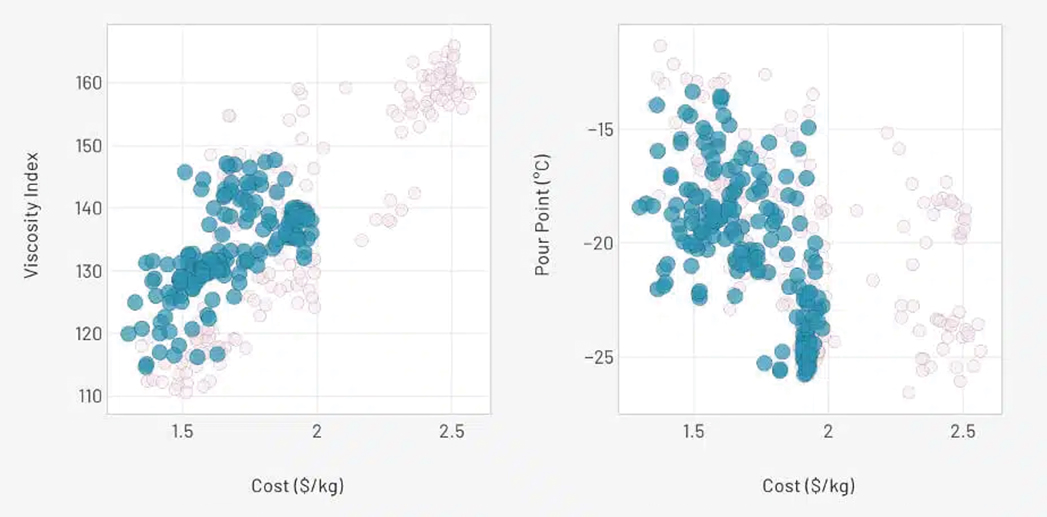
The first is substitution: What happens if a key ingredient disappears? If a particular base oil, additive or thickener becomes constrained, teams need to know whether they can still hit performance targets and what alternative paths remain plausible. (See Figure 3.)
The second is material criticality: Which raw materials are strategically critical and which are more replaceable? Not every ingredient carries the same level of formulation risk. Some variables have an outsized effect on final properties, while others offer more room to move.
The third is economic adaptation: How should formulations change when ingredient prices shift sharply? (See Figure 1.) A raw material may remain available but become economically unattractive. In that case, teams need to understand how cost-sensitive alternatives affect performance, manufacturability and overall margin.
These are not abstract modeling questions. They are operating questions that determine how quickly a manufacturer can produce a credible Plan B.
Figure 1. Formulating Around Cost Increase
Each dot represents AI-generated data of a hypothetical formula. Upper left quadrant meets goal of 130+ VI at cost below $1.6/kg. Formulas in right graph use less ZDDP but meet targets by adjusting other ingredients.
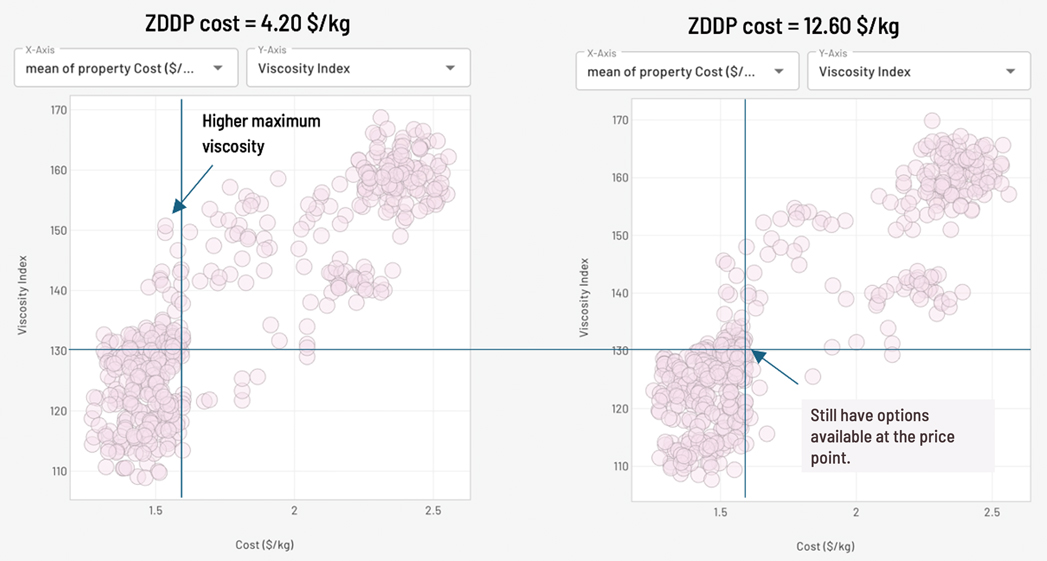
Figure 2. VI Improver Effect on Viscosity Index
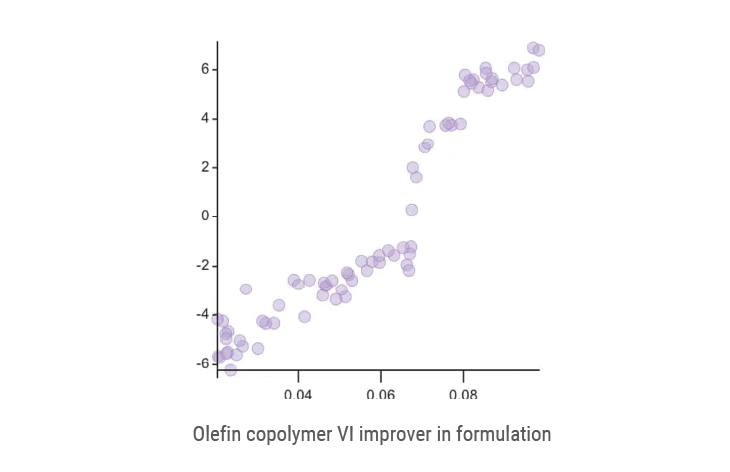
Figure 3. Properties with/out Particular Base Oil
Blue dots represent performance with base oil in question. Pink dots represent performance without. For VI, higher is better. For pour point, lower is better.
A More Useful Role for AI In Lubricant Development
This is where AI can be useful, provided it is applied in the right way. In lubricants, the value is not in replacing formulators or automating judgment. It is in helping teams evaluate the trade space more effectively under changing constraints.
A practical AI workflow can help technical teams compare what happens under different supply and cost assumptions before they commit scarce validation resources. For example, one project can evaluate candidate experiments assuming a preferred base oil remains available, while another examines what changes when that material is removed from the search space. A similar approach can be used to test the effect of an additive price shock by changing cost inputs and observing how recommended formulations shift.
The point is not that the model makes the decision. The point is that it gives the team a better starting point for decision-making by showing how recommendations move when constraints move. That creates a more structured way to evaluate substitution risk, cost sensitivity and performance trade-offs in the same workflow.
From Ingredient Lists to Decision Leverage
One of the more valuable capabilities in this context is understanding ingredient criticality. Lubricant formulations can contain a mix of components that each matter differently to final performance. Some raw materials may strongly influence oxidation stability, wear protection or low-temperature behavior. Others may be easier to replace without materially changing results.
If teams can identify which variables are most influential in the predictive workflow, they gain a better basis for prioritizing inventory strategy, supplier monitoring and contingency planning. That does not eliminate risk, but it helps separate strategically critical materials from those that are primarily operational choices.
For a VP leading product development or innovation, that distinction matters beyond the lab. It supports more informed conversations with procurement, operations and business leadership. Instead of reacting only when a disruption becomes acute, teams can prepare around the materials most likely to create technical bottlenecks.
Why This Matters at the Business Level
For lubricant manufacturers, resilience is visible in three places: technical speed, margin protection and continuity.
Technical speed improves when teams can move from a disruption signal to a focused validation plan faster. Margin protection improves when cost-sensitive formulation options can be explored without losing sight of performance. Continuity improves when the organization has a repeatable method for building backup paths rather than treating each disruption as a one-off emergency.
That is especially relevant in lubricants, where product performance must remain dependable even when the raw-material environment is not. Customers still expect consistency. Internal stakeholders still expect commercially sound decisions. Regulatory and specification requirements still have to be met. The technical organization is therefore under pressure not just to reformulate, but to reformulate intelligently.
This is why resilience should be viewed as more than a sourcing function. Sourcing may identify the disruption, but formulation teams determine how effectively the business can respond to it.
A More Repeatable Plan B
The lubricant companies that handle volatility best are unlikely to be the ones that simply run more experiments. They will be the ones that ask better questions earlier, understand trade-offs more clearly and direct validation effort toward the most credible options.
That is the practical promise of AI in this setting. Not a theoretical showcase. Not an attempt to remove expert judgment. A better decision workflow for navigating constrained formulation problems.
As disruptions continue to affect base oils, additives and overall cost structure, lubricant manufacturers need more than reactive reformulation. They need a repeatable way to test alternatives, identify strategic material risk and respond faster when conditions shift.
Change may indeed be the only constant. In lubricants, the competitive difference will come from how quickly technical teams can turn that reality into an informed formulation response. AI platforms are part of that broader shift, but the larger point is industry-wide: resilience now depends on making better formulation decisions under constraint.