

A Little is Better than Nothing
The United States-Iran conflict remained largely unresolved in early October, with Iran maintaining its grip on the Strait of Hormuz and few vessels able to traverse the crucial waterway. But there was a glimmer of hope as news emerged that the official U.S. distributor of API Group III base oils manufactured in Abu Dhabi by producer Adnoc had been able to lift products and sail a vessel through the strait, with the cargo reported to be on its way to the U.S.
There were also rumblings that another vessel had loaded at the Bapco terminal in Sitra, Bahrain, and that Shell Trading had also been able to ship product out of Qatar, but these accounts were unconfirmed.
According to reports, Penthol, the Adnoc distributor, had informed customers that they would be receiving product in late October, but the company would be maintaining its force majeure in place since July on contract commitments. Arranging passage through the strait was still uncertain and risky, and while Iran threatened to attack ships passing through Hormuz, there was no warranty that future shipments could be achieved. But buyers clung to the thought that at least one cargo had managed to make it through, and perhaps more would be on its way soon.
Managing to ship more base oils out of the Persian Gulf would indeed be a great feat, as Iran’s attacks on vessels attempting the Hormuz crossing escalated in early October. While crude oil flows from the Middle East increased substantially in late September, at least 11 tankers were attacked in and around the strait during the first week of October, offering a sobering reminder that the increase in crude exports might be short-lived as the situation was still extremely volatile.
Meanwhile, freight and insurance rates continued to soar, helping to drive Group III prices up, with SK Enmove, Petro-Canada and Motiva announcing posted price increases for Group II+ and Group III base oils between Sept. 8 and Oct. 1.
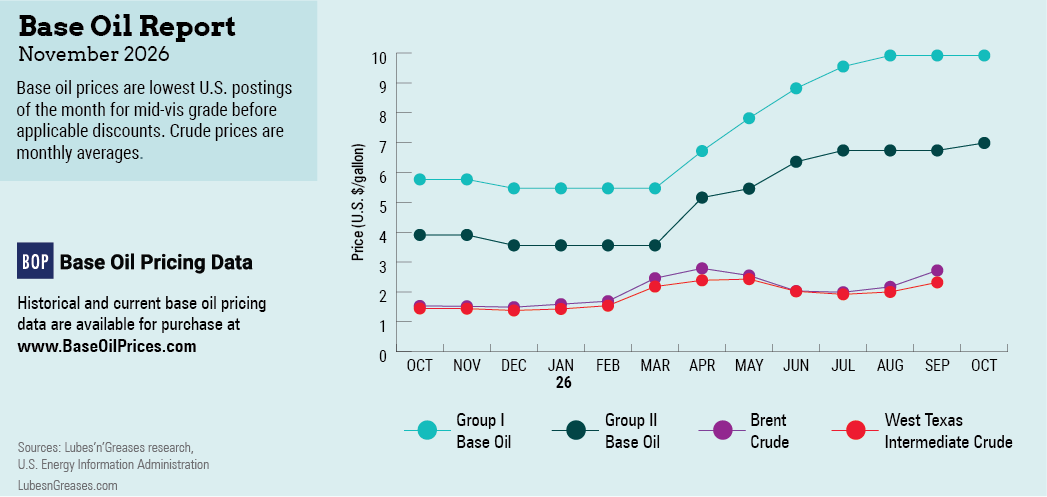
Most base oil groups have been affected one way or another by the conflict in the Middle East, but the Group III category undoubtedly continued to feel the brunt of its consequences. Group III production in Abu Dhabi, Bahrain and Qatar remained mostly shut down or run at very low rates as producers were generally unable to ship products out, although some shipments were moved by truck within the region.
Ongoing turmoil surrounding crude oil shipments from Saudi Arabia amid Houthi rebel attacks on vessels in the Red Sea and a strike on Saudi Aramco’s East-West pipeline — which was used to bypass Hormuz — exerted upward pressure on crude oil prices and intensified concerns about the likelihood of returning to normal conditions.
The firm crude oil and feedstock prices and a fairly tight supply and demand balance also triggered increases for Group II base oils. Motiva and Chevron implemented Group II posted price increases in September and early October.
On the naphthenics base oils front, San Joaquin Refining communicated a 50-cents-per-gallon price increase on low-viscosity specialty oils, which went into effect on Sept. 17. Aside from regional supply and demand imbalances, an atypical price difference between naphthenic and paraffinic grades prompted some blenders to use pale oils instead of paraffinic cuts in some applications as prices were more competitive. This may have exerted upward pressure on naphthenic prices.
Buyers’ anxiety about Group I and Group II base oil shortages seemed to subside somewhat in early October as availability started to ease when producers started to release some of the extra inventories they had kept during the peak months of the hurricane season.
However, uncertainties regarding Saudi crude availability prompted some refiners to turn cautious and suspend spot offers as they strove to meet contractual obligations. Some U.S. refineries run on Middle East crude, and further supply disruptions could force refiners to reduce runs and alter their refining yields. At the same time, there has been continuous concern about soaring diesel prices and a need to produce more fuels to replenish stockpiles. This may affect refining decisions and impact base oil production in the last quarter of the year.
Demand showed diverging trends, with some consumers rushing to secure base oils as they anticipated supplies to remain limited, particularly as a number of turnarounds in the Americas and other regions were expected to tighten availability. Other buyers were more conservative and delayed purchases to await geopolitical developments that may change the price trajectory of crude oil, diesel and base oils.
Crude oil and base oil supply disruptions were expected to continue, but the physical lack of molecules was not the only issue affecting market participants. For independent blenders, a lag in passing feedstock price hikes onto lubricants and finished products has led to severe margin compression. Blenders have attempted several rounds of lubricant price increases since the start of the Iran conflict, with some of them being successfully implemented.
However, buyer resistance to these increases has grown, and some manufacturers now face a painful cash-flow squeeze. Unable to absorb the cost of expensive new inventory under increasingly restrictive credit limits, smaller blenders are being forced to scale back production, delay feedstock purchases or cede market share to larger, more integrated competitors. If the situation does not improve, these issues may eventually lead to more widespread production cuts and reduced base oil consumption. 
Gabriela Wheeler is base oil editor for Lubes’n’Greases. Contact her at Gabriela@LubesnGreases.com