
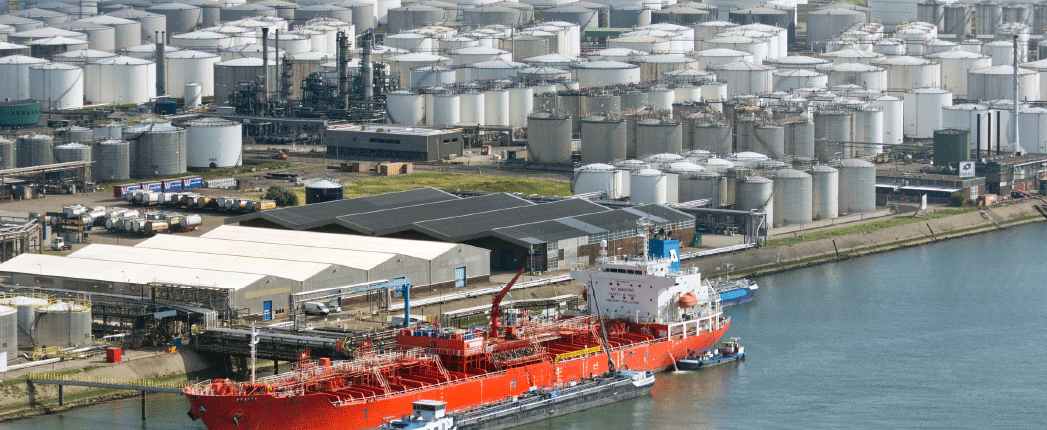
Like many of its European neighbors, the lubricants market in the Netherlands is mature and volume sales are gradually declining. The causes are familiar — rapid changes in vehicle drivetrain technology away from internal combustion engines, tightening environmental emissions regulation and the drive for the circular economy. Rather than being threats, they become new opportunities for higher-value products and services on the horizon, especially when combined with specialized industrial applications.
Sales Force
Domestic lubricant sales fell from about 120,000 metric tons in 2017 to around 112,000 tons in 2023, a decline of 7.2%, according to data gathered by the Union of the European Lubricants Industry. (See Figure 1) That decline trend is likely to continue in a market where volume growth is increasingly difficult to achieve, particularly in industrial lubricants.
Automotive lubricants remained the largest segment, with sales of about 65,000 tons in 2023, virtually unchanged from 2017. Research by Marqstats puts automotive lubricant sales at 54,800 tons in 2025. Hardly surprising when in the same year, 331,915 car registrations, or 85.6% of all new passenger cars, were battery, plugin or hybrid.
Industrial lubricant sales fell from around 31,000 tons to 26,000 tons over the same period, a decline of about 16%. Greases continued to be a relatively small category but recorded slight growth.
With these figures comes a crucial qualification. Market data can differ depending on whether they measure revenue or volume, domestic sales or international trade, and how automotive and industrial products are defined.
The Netherlands has a much larger role in the lubricant trade than its domestic consumption figures suggest. Imports and exports greatly exceed domestic production and consumption, signifying the country’s key role as an international trading hub for base oil and finished lubricants. Its location, infrastructure and established distribution network give lubricant companies access to markets across Europe and beyond.
Competitive Landscape
The structure of the Dutch market is diverse. International oil companies and lubricant majors compete alongside independent blenders, distributors, multi-brand suppliers and specialist companies. Majors benefit from scale, brands, relationships with original equipment manufacturers and integrated supply.
Independent blenders compete through flexibility, local production and private-label business. Distributors offer product availability, broad portfolios and local customer relationships, while specialists compete through technical knowledge, niche products and services.
That makes the Dutch market highly competitive. It is a displacement market in which growth generally means taking business from another supplier rather than relying on an expanding overall market.
The value chain starts with base oils and additives and moves through blending, formulation, testing, packaging and distribution. The end users are spread across automotive and transport, manufacturing, marine, food and beverage, construction, infrastructure, energy and utilities.
Customer requirements vary considerably between those sectors. Automotive customers focus heavily on specifications, viscosity, drain intervals and total cost of ownership. Manufacturing customers need products for hydraulics, bearings, gears and metalworking. Marine applications place greater emphasis on environmental performance, approvals, water contact and reliability. Food and beverage customers have additional requirements surrounding food safety, contamination control and audits. Energy applications include wind turbines, transformers and other equipment where lubricant life and reliability are critical.
Source of Value
The source of value is moving further along this chain. Lubricant suppliers can no longer rely on the product alone to differentiate themselves. Formulation expertise, approvals, technical support, oil analysis, condition monitoring, lubrication maintenance and training are becoming increasingly important.
This shift is particularly relevant as the Dutch market responds to electrification.
Electric vehicles will reduce demand for conventional passenger-car engine oils, but electrification should be viewed as a change in the lubricant mix rather than the disappearance of lubrication. Hybrid vehicles will continue to require engine oils, transmission fluids and cooling fluids, while battery-electric vehicles create demand for e-fluids, thermal-management products and electrically compatible greases.
Industrial electrification is also creating opportunities. Wind turbines, automation systems and electric drives require specialized lubricants, opening applications that did not exist in the same form in the conventional powertrain market.
Sustainability
Sustainability is another major influence. Demand for bio-based products, environmentally acceptable lubricants, longer-life products, circularity and lower-carbon solutions as are areas that will shape the market toward 2030.
Environmental requirements are also becoming more closely connected with commercial decisions. Companies need to deal with rules covering classification and labelling under CLP, chemical restrictions under REACH and PFAS requirements, packaging under the EU Packaging and Packaging Waste Regulation, and environmental requirements such as the EU Ecolabel.
Environmental claims are also receiving greater attention. Product carbon footprints and other CO2 claims need supporting evidence, while customers increasingly expect suppliers to provide documentation and alternatives when substances become restricted.
For lubricant companies, that makes regulatory knowledge part of the product offering. Mets said suppliers that can translate complex requirements into practical product solutions will be better positioned as regulation becomes more demanding.
Digitalization adds another layer. Oil analysis, condition monitoring and asset data can help customers move from routine lubricant changes towards condition-based maintenance. That can extend equipment life, reduce unplanned downtime and increase the value of technical services around the lubricant.
The combination of these trends points towards a market where fewer liters can generate more value. Synthetic lubricants, environmentally acceptable lubricants, e-fluids, longer service intervals and monitoring all have the potential to shift the commercial focus from product volume towards performance.
There are three possible market conditions for 2030. In one, customers concentrate on lowering costs, standardizing products and extending service intervals. Scale and demonstrable savings would become the main competitive advantages.
In a second scenario, regulation becomes the dominant factor. Customers would need more documentation, environmentally acceptable products and alternatives to restricted substances. Product knowledge and compliance capabilities would become increasingly important.
The third scenario puts reliability at the center. Customers invest more in monitoring, lubrication services and outsourced maintenance, increasing the role of technical specialists.
Figure 1. Dutch lubricant domestic sales
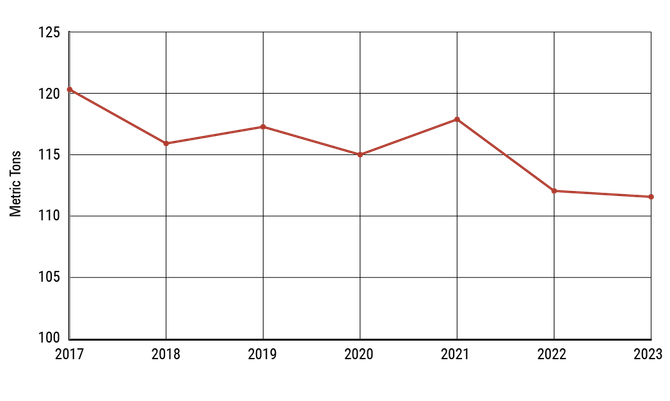
Source:UEIL data for the Netherlands
The actual market is likely to contain elements of all three. Cost pressure will remain important, regulation will continue to expand, and customers will continue looking for ways to improve equipment reliability.
For lubricant suppliers, the direction of the Dutch market is clear even if the exact pace of change is not. Domestic volumes have already fallen, with industrial lubricants accounting for much of the decline. Automotive demand has remained relatively stable, but electrification will gradually alter the product mix.
The opportunity lies in what replaces the lost volume. E-fluids, thermal-management products, specialist industrial lubricants, environmentally acceptable products, monitoring and technical services all offer ways to create value in a mature market.
The Dutch lubricant market may therefore become smaller in tonnage while becoming more technically demanding. For suppliers, the challenge will be to sell performance, reliability and expertise alongside the lubricant itself.
 TACO METS is technical director at Van Meeuwen Lubrication, chairman of the Dutch Association of Lubricating Oil Companies and on the UEIL board.