


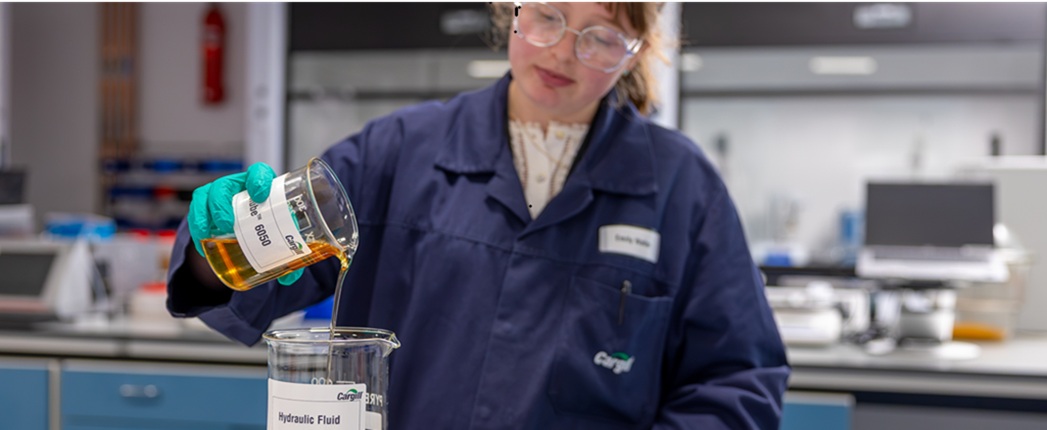
An innovative new synthetic ester co-base oil from Cargill now offers formulators a more sustainable solution for high-performance EAL hydraulic fluids and stern tube oils.
The latest addition to Cargill’s popular Priolube™ range provides the perfect balance of performance and sustainability – a biodegradable*, bio-based alternative** to conventional synthetic esters, mineral oils, and polyalphaolefin-based fluids that offers all the attributes required for even the most demanding of environments.
The next-generation synthetic ester co-base fluid is engineered to deliver the durability needed to withstand the toughest real-world operating conditions.
Extensive testing shows that Priolube™ 6050 is a real step forward versus competitive technologies, offering exceptional wear protection, improved efficiency, and 30% lower traction versus conventional saturated esters and PAO.
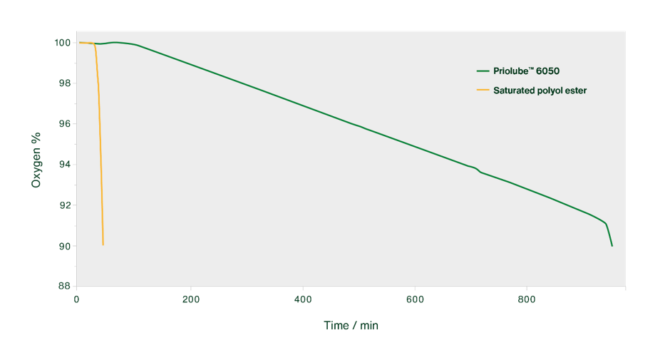
Priolube 6050 demonstrates a significantly longer oxidation-induction period than conventional base oils, indicating greater resistance to high temperatures and additional protection for machinery (see Figure One).
Superior oxidative stability
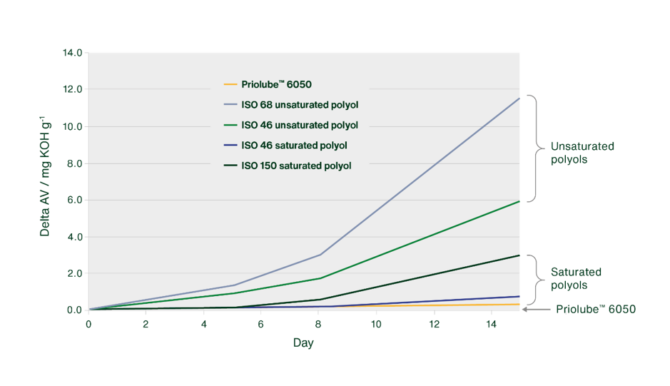
It also boasts excellent hydrolytic stability, with greater resistance to water contact and contamination (see Figure Two).
Exceptional hydrolytic stability
Cargill’s Priolube™ 6050 delivers ready biodegradability* and 86% bio-based** content to create high-performance Environmentally Acceptable Lubricants (EAL) formulations.
Priolube™ 6050 is now available throughout Europe, with plans to expand coverage globally soon. Samples are available on request.
For more information about Priolube™ 6050, visit www.cargill.com/Priolube-6050.
*According to OECD 301B
**According to ASTM D6866
About Cargill
Working alongside customers across the lubricants value chain, Cargill helps design next-generation lubrication systems through advanced specialty chemistry, best-in-class application expertise, and globally reliable supply. Its high-performance base oils and additives portfolio offers many bio-based and biodegradable options and is backed by transparent sustainability data (including carbon footprint) and continuous innovation, enabling greater equipment efficiency, reliability, and durability across applications.