

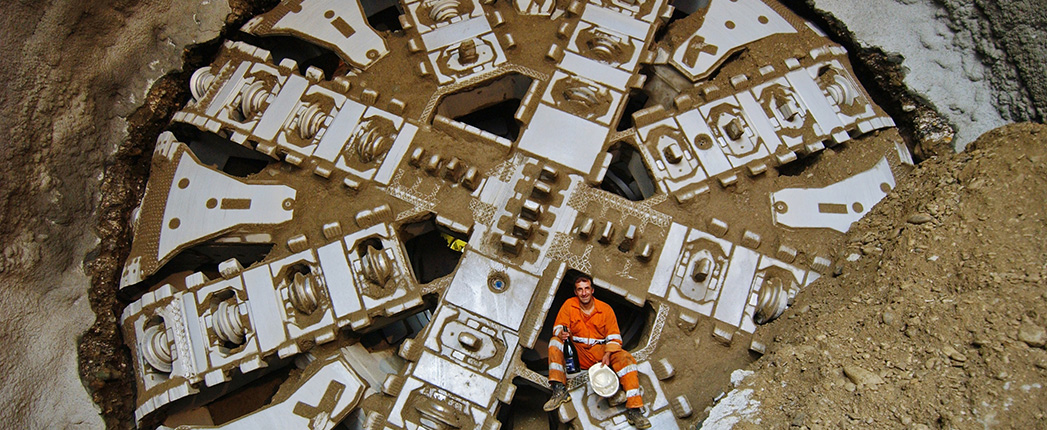
China’s expanding transportation infrastructure, including the 39-kilometer Taicang-Haimen underwater tunnel, is expected to increase demand for lubricants used in tunnel-boring machines, according to Wang Xianhui, a retired industry veteran and technical consultant for Chinese lubricant companies, who spoke at a recent industry event.
Tunneling projects in China are advancing alongside the rapid expansion of high-speed rail and highway networks. New projects include the Jintang Undersea Tunnel, the Pearl River Estuary Tunnel and the Yarlung Tsangpo River dam in Tibet.
Grease is critical to tunnel-boring operations. Different formulations are required for tail seals, main bearing cavities and labyrinth seals. Tail seal maintenance and cutterhead lubrication rely on extreme-pressure bearing greases, paste-like seal compounds and water-resistant calcium sulfonate or lithium complex greases. Biodegradable and environmentally acceptable products are increasingly favored for undersea and environmentally sensitive projects.
Chinese-made boring machines dominate the domestic market for tunnel and subway construction. Although some subway projects have been suspended because of mounting local government debt, the country continues to fund large-scale efforts to reshape its transportation network.
Foreign suppliers such as Total, Condat and Shell remain key players in the grease market, but Wang said competitive Chinese firms, including Shanghai-based Rübtz, are beginning to gain a foothold.
Tunnel-boring machines require frequent lubrication, which benefits suppliers. A single machine can use about 100 tons of grease during a project, Wang said.
The main bearing, considered the most critical component of a boring machine, must be sealed with greases that offer strong adhesion and cohesion. Wang added that lubricants must also provide thermal stability, withstand cold-weather conditions and meet environmental standards, since much of the material remains underground after use.