
Vietnam’s steadily growing lubricant demand is being supported by solid economic conditions, especially in automotive sales and industrial output, said an industry insider at a recent event in Singapore.
Meanwhile, the country moved closer to reaching a trade deal with the United States that would place a 20% tariff on Vietnamese goods entering the U.S. and zero tariffs on American goods entering Vietnam. Exports to the U.S. account for about a third of Vietnam’s GDP and are pivotal to the country’s economic growth.
This growth is fueling a rapidly expanding vehicle parc, strengthening urban infrastructure and prompting a consumer shift toward high-performance lubricants, said Saha Ripon, head of Motul’s D Center, at the ICIS Asia conference in Singapore.
“Vietnam’s economic growth of about 6-7% GDP and an approximate $30 billion investment in roads are increasing vehicle use, engine run-time and lubricant consumption,” Saha said.
Car ownership is growing steadily. According to data from the Vietnam Automobile Manufacturers’ Association, monthly car sales are approaching 30,000 units. Motorbikes sell at more than eight times that rate, reaching around 250,000 units per month. Sales of e-bikes, hybrids and battery electric vehicles are also rising.
Demand for finished lubricants is projected to reach 525 million liters by 2029, representing annual growth of about 3% over the next five years. Over the longer period through 2034, the growth average is expected to be 2.3%, according to Kline & Co.’s 2024 Lubricant Market Report.
A sharp spike in 2021 saw demand rise by 24.8% to 429.3 million liters, up from 344 million liters in 2020, largely due to post-COVID-19 recovery. In 2024, the market reached 556.4 million liters, with the most significant growth observed in the commercial segment, Saha said.
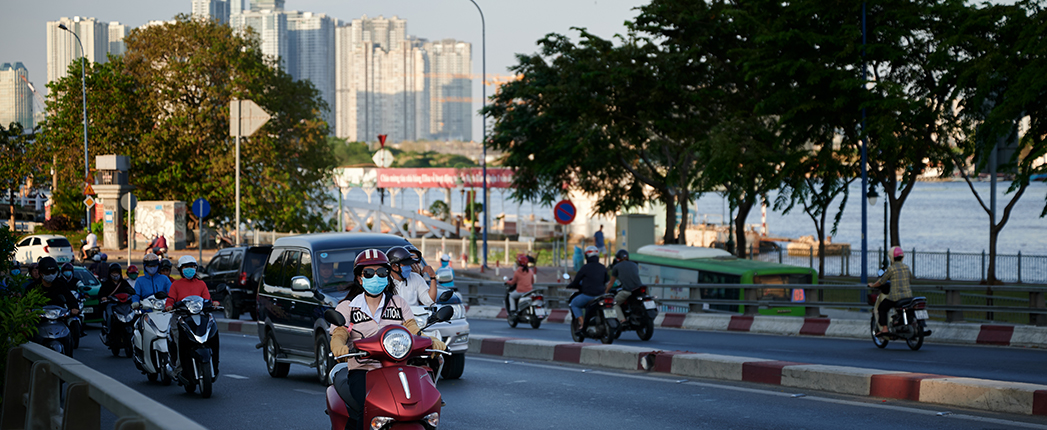
A substantial share of automotive lubricant consumption comes from Vietnam’s 50 million motorcycles, which account for 22% of total demand. Heavy-duty diesel oil accounts for 33%, process oils for 10% and industrial fluids such as metalworking and hydraulic oils for 7%.
Other factors driving growth include urbanization and infrastructure development. Suppliers also anticipate continued expansion in the EV and hybrid vehicle segments, which will fuel demand for specialized fluids.
There has also been significant growth in e-commerce and aftermarket transactions, with lubricant sales on platforms like Shopee and Lazada rising 120% year-over-year. This trend has expanded access for DIY users and service workshops. Within this segment, there has been a noticeable shift toward premium lubricants, with semi-synthetic and fully synthetic oils growing at a compound annual rate of 8.2%, according to Saha.
Supply Landscape
Vietnam’s lubricant supply landscape is composed of both domestic production, which makes up about 60% of the market, and imports, which account for the remaining 40%. The market is shifting toward premium synthetics and EV-ready products, with e-commerce transforming distribution models. However, supply chain challenges such as counterfeit risks and raw material volatility remain pressing concerns.
The country has a strong domestic base backed by major international brands, with local producers including Petrolimex, PV Oil, Mekong Petrochemical JSC and APP Saigon Petro. International players with a significant presence include Shell, TotalEnergies, Castrol, Idemitsu, Motul, Chevron and ExxonMobil.
Vietnam still imports a sizable share of high-end finished lubricants. Its top sources are Singapore, accounting for 35% of imports, and South Korea at 25%. Premium lubricants are often brought in by global brands to meet performance requirements. Distribution channels are rapidly diversifying. While authorized distributors and service centers handle direct sales, independent garages and local workshops still serve about 60% of rural demand. E-commerce is gaining ground, led by platforms such as Shopee and Lazada.
Despite positive developments, Vietnam’s lubricant market continues to face supply chain constraints, including price volatility in raw materials, risks from counterfeit products and limited infrastructure for recycling used lubricants. Fluctuating international base oil prices and geopolitical shifts contribute to pricing challenges. Counterfeits erode brand trust and compromise user safety, while a lack of circularity infrastructure limits sustainability progress.
Companies such as Motul are responding with new sustainable product lines and continued investment in R&D. Saha expressed optimism that Vietnam’s lubricant industry will continue its progress in innovation, product quality and relevance across Asia-Pacific markets.